The Battle for Truth - Part 4 - The Implementation Gap: When technical complexity meets organizational reality
A strategic guide for technology and data leaders navigating the complexity of modern data ecosystems and data in enterprise.

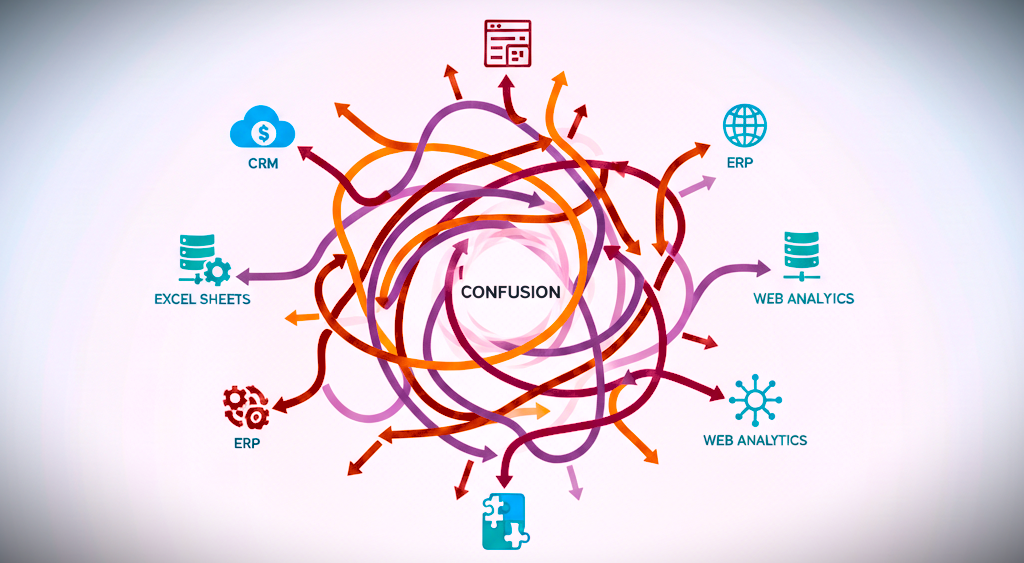
Work Package 3: In Progress. Work Package 4: In Progress.
Sound like your project board?
On paper, everything looks fine. The roadmap is approved. The architecture is done. Tools are picked. Standups are running.
But somehow… delivery is still painfully slow.
Not because your engineers suddenly forgot their jobs.
Not because the platform “can’t scale.”
Not because the cloud is “too hard.”
It’s because you’ve hit the Implementation Gap: the space between “we agreed what we want” and “this is live, people use it, and someone clearly owns it.”
Most data programs don’t fail because the plan is bad. They struggle because getting things shipped in a real organization is messy.
The Anatomy of the Implementation Gap
The (Perfect) Storm of Execution
This is the moment where enterprise reality shows up:
- Your domains are “aligned,” but nobody agrees who owns what end-to-end
- Teams are staffed, but key skills are spread thin across ten priorities
- Dependencies multiply faster than sprint capacity
- Every integration needs a decision — and every decision needs a meeting — and every meeting needs the “right stakeholders”
So the plan looks healthy… while the delivery quietly bleeds out.
The Faces of the Implementation Gap
Coordination Complexity: When cross-domain becomes cross-traffic
Data products don’t live in one team. They touch:
- source system owners
- integration teams
- platform teams
- security & compliance
- data governance
- analytics consumers
- operations / support
And every group has its own priorities, backlog, and definition of “urgent.”
Real-world impact: delivery becomes a dependency chain where progress is only as fast as the slowest approval, the slowest interface, or the busiest team.
You don’t have a technical architecture problem.
You have a coordination architecture problem.
The Bottleneck Effect: When unclear ownership slows everything down
The most common implementation blocker isn’t missing code. It’s missing authority.
Typical symptoms:
- “Who owns the definition of this KPI?”
- “Who approves access to that dataset?”
- “Who decides if we can deprecate this field?”
- “Who signs off on quality thresholds?”
- “Who owns the incident when data breaks at 2 a.m.?”
When ownership is unclear, the organization defaults to the safest behavior:
Wait. Escalate. Add meetings. Avoid responsibility. Repeat.
Real-world impact: your delivery velocity collapses not because the team is slow, but because decisions take longer than development.
Resource Reality: Why technical gaps often reflect organizational gaps
You’ll hear this as a technical issue:
- “We don’t have enough data engineers.”
- “We need more architects.”
- “We lack platform expertise.”
- “We can’t support real-time + governance + self-service yet.”
Sometimes that’s true. Often it’s incomplete.
What looks like a “skills shortage” is frequently:
- people assigned part-time across too many initiatives
- unclear priorities (everything is P0)
- overloaded subject-matter experts who become unintentional gatekeepers
- no time budgeted for documentation, enablement, and operational readiness
Real-world impact: the platform grows, the backlog grows faster, and your best people become bottlenecks rather than force multipliers.
Case Example: The cross-domain coordination that actually worked
A manufacturing organization launched an operations data product intended to support real-time monitoring and weekly performance reporting.
Early delivery stalled:
- OT owned the sensors, IT owned the network, data engineering owned ingestion, and analytics owned consumption.
- Incidents bounced between teams because nobody owned the product end-to-end.
- Changes required four approvals and two steering meetings.
They made one structural change:
A “Data Product Squad” with explicit end-to-end accountability
- One accountable Product Owner for outcomes and prioritization
- Named data owner + steward for definitions and quality thresholds
- Platform liaison embedded (not “available on request”)
- Security/compliance checklist standardized into templates (fewer bespoke reviews)
- Operational support model defined: on-call path, SLAs, and incident ownership
Result: delivery didn’t magically become easy — but it became predictable. Dependencies were still real, but decisions stopped being optional.
The lesson: cross-domain work succeeds when coordination is designed, not hoped for.
Breaking the Implementation Gap: A practical framework
Phase 1: Delivery reality check (before scaling anything)
- Identify your top 5 recurring blockers (approvals, access, definitions, environments, SMEs)
- Map dependencies for the next 2 sprints (not the whole program)
- Define what “done” means operationally (monitoring, lineage, access, support)
Phase 2: Ownership and decision design
- Assign one accountable owner per data product
- Define decision rights:
- who decides definitions
- who decides access
- who decides quality thresholds
- who decides tradeoffs (time vs scope vs quality)
- Establish escalation paths that are fast and explicit
Phase 3: Execution systems that survive enterprise reality
- Standardize:
- access request patterns
- data contracts
- quality checks
- deployment gates
- Build “enablement capacity” into plans (docs, training, handover)
- Invest in the boring part: operational readiness and support
Red flags: You’re in the Implementation Gap if…
- Your sprints complete tasks but not outcomes
- Every release depends on “one person who’s always busy”
- Requirements are clear, but the delivery still stalls
- Governance exists, but only as a review board (not as an operating model)
- The same cross-team arguments repeat every month
Immediate actions for Closing the Gap
Coordination mapping (30–60 min workshop)
- List every team required to deliver v1.0
- For each dependency, write: who owns it, how to request it, expected turnaround time
Bottleneck audit
- Identify your top 3 bottlenecks (people or teams)
- Reduce load by:
- standard templates
- delegated decision rights
- time-boxed approvals
Resource honesty
- Which roles are truly missing vs artificially “missing” due to fragmentation?
- If your key SMEs are part-time, assume delivery will behave like part-time.
The Path Forward: From Implementation Pain to Operating Advantage
The Implementation Gap is where most “modern data” programs quietly lose momentum. But organizations that close it gain something rare: an operating model that turns good intentions into repeatable outcomes.
- Predictable delivery in cross-domain environments
- Faster decision cycles because ownership is explicit
- Higher adoption because products are operationally reliable
- Stronger trust because accountability is real—and visible
Technical complexity can be engineered away.
Organizational ambiguity is what turns solvable into stalled.
The question isn’t whether implementation will get messy—every enterprise hits the friction between platforms, processes, and people. The question is whether you’ll keep treating that friction as “just how it is,” or design through it: clear decision rights, named owners, realistic operating procedures, and the discipline to run data like a product.
Close the gap, and you don’t just deliver a solution.
You build a capability—one that ships, scales, and keeps delivering long after the kickoff deck is forgotten.
Next week in our "The Battle for Truth: Navigating Data's Critical Pain Points Across the Enterprise" series: The Decision Deadlock: Who’s Actually in Charge of Your Data?
Previously in this series: The Battle for Truth – Part 3 – The Scope Trap.
#DataManagement #DataGovernance #DataIntegration #MasterData #DataStrategy #DigitalTransformation #DataQuality #SiemensData