The Battle for Truth - Part 3 - The Scope Trap: Why unclear requirements kill data projects before they start
A strategic guide for technology and data leaders navigating the complexity of modern data ecosystems and data in enterprise.

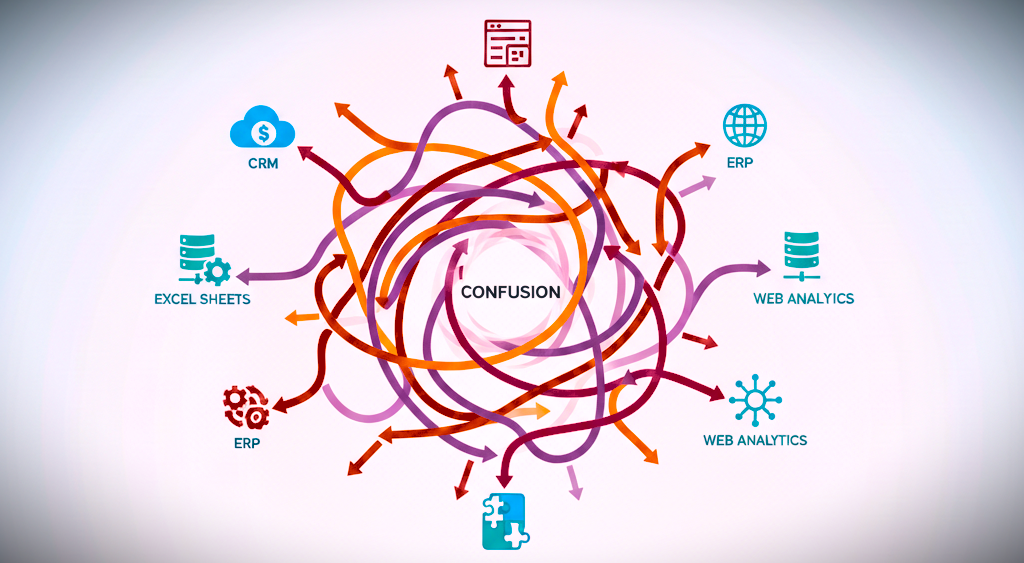
Wednesday afternoon. Your executive team has made a decision.
"We need data products for our operations data. Make it happen."
Sounds simple enough. Until the questions start.
Which operations?
What problem are we solving?
Who’s going to use it?
What does “done” actually look like?
And why is everyone looking at you for answers that should have been decided before the meeting or never discussed?
Welcome to "The Scope Trap", where good intentions and urgent timelines collide with the brutal reality that "building data products" aren't actually requirements. They are wishes.
The Anatomy of Scope Ambiguity
The (Perfect) Storm of Unclear Requirements
Picture this scenario: Your organization has decided to make modernization push with its data , adopt data mesh, data products, cloud warehousing, modern and cheaper infrastructure, maybe even machine learning, and certainly AI. The business case is compelling, the budget is approved, and leadership team is vibrating with the open possibilities. There's just a small problem, nobody can clearly define an articulated vision of what success looks like.
The meeting transcript reads like this:
- Domain Manager: "We need better data accessibility"
- IT: "So... we're building a data lake?"
- Business: "“I thought we needed a data warehouse"
- Data Scientist: "What we really need is a feature store"
- Data Operations Manager: "I just want to stop manually copying data between spreadsheets"
Everyone's right from their perspective. Everyone is wrong if you try to solve it all at once.
The Faces of Scope Ambiguity
The Requirement Mirage: When "Clear" Isn't Clear
Your stakeholders think they're being specific:
- "We need real-time data" (But what constitutes "real-time"? Milliseconds? Minutes? Hours?)
- "Include all relevant operations data" (But who defines "relevant"? And which operations?)
- "Make it user-friendly" (But for which users? Data scientists? Business analysts? Executives?)
- "Make it self-service" (But from which system, which data?)
Real-world impact: Your development team builds exactly what was requested, only to discover that stakeholders had completely different expectations. Six months and significant budget later, you're starting over.
The problem isn’t execution. It’s interpretation.
Use Case Chaos: When Everyone Has Different Needs
Different stakeholders envision different solutions:
- Finance wants historical reporting capabilities for compliance
- Operations needs real-time monitoring for immediate decision-making
- Sales requires predictive analytics for forecasting
- Marketing demands customer behavior insights for campaign optimization
Real-world impact: You attempt to build one solution that serves everyone, resulting in a complex system that serves no one particularly well. Or worse, you build multiple incompatible solutions that recreate your original data silo problem.
The Planning Paradox: When Speed Kills Clarity
Pressure to deliver quickly creates a dangerous cycle:
- Leadership wants immediate results to justify the investment
- Teams rush into development without proper requirements gathering
- Scope creep emerges as stakeholders realize what they actually need
- Timeline pressure prevents proper redesign, leading to technical debt
Real-world impact: Your "quick win" becomes a long-term maintenance nightmare that costs more to fix than it would have cost to build correctly from the start.
The Hidden Costs of Scope Ambiguity
The Development Death Spiral
When scope isn't clearly defined, development teams face impossible choices:
Technical Debt Accumulation:
- Developers make assumptions about requirements
- Quick fixes become permanent solutions
- Architecture decisions get made without full context
- Future enhancements become exponentially more expensive
Feature Creep Explosion:
- "While we're at it" requests multiply
- Core functionality gets diluted by edge cases
- Timeline estimates become meaningless
- Quality suffers as teams try to accommodate everything
Stakeholder Frustration Cascade:
- Business users don't get what they expected
- IT teams feel like they can't win
- Leadership loses confidence in data initiatives
- Future projects face increased skepticism
The Organizational Impact
Resource Misallocation:
Your most skilled technical resources spend time building the wrong things, while critical business needs remain unaddressed.
Opportunity Cost:
While your team rebuilds misunderstood requirements, competitors with clearer scope definitions are delivering value to their customers.
Trust Erosion:
Failed or delayed data projects damage the credibility of future data initiatives, making it harder to secure resources for legitimate needs.
Case Example: The "Simple" Dashboard That Wasn't
The Initial Request
A manufacturing company's executive team requested a "simple operational dashboard" to monitor plant performance. The scope seemed straightforward:
- Show key performance indicators (KPI)
- Update in real-time
- Accessible to plant managers
Then The Scope Trap Unfolds
Week 1: Development begins with basic KPIs
Week 3: Finance requests cost metrics be included
Week 5: Safety team needs incident tracking
Week 7: Maintenance wants equipment status
Week 9: Quality assurance requires defect rates
Week 12: Executive team wants predictive analytics
Another Reality Check
What started as a "simple dashboard" had become:
- A complex data integration project spanning 12 different systems
- A real-time analytics platform requiring significant infrastructure
- A predictive modeling system needing machine learning capabilities
- A multi-user application with role-based access controls
The outcome: 18 months later, the project delivered a sophisticated platform that nobody used because it was too complex for the original use case and didn't fully satisfy any of the added requirements. The extended development time meant that most departments had already implemented their own solutions to address urgent needs, making the final product obsolete before launch.
The Lesson
The problem wasn't that stakeholders had additional needs. The problem was that these needs were added during development rather than during planning. Clear scope definition would have revealed that the organization needed multiple solutions, not one complex system trying to serve everyone.
Breaking the Scope Trap: A Strategic Framework
Phase 1: Stakeholder Archaeology
Understanding True Needs
Map Your Stakeholder Universe
- Identify everyone who will interact with your data product
- Understand their current pain points and workflows
- Document their success criteria and constraints
- Discover their unstated assumptions about the solution
Conduct Use Case Workshops
- Facilitate sessions where stakeholders describe their ideal workflows
- Create detailed user stories with specific acceptance criteria
- Identify conflicts between different stakeholder needs
- Prioritize use cases based on business impact and feasibility
Document the Current State
- Map existing data flows and dependencies
- Identify current workarounds and manual processes
- Understand regulatory and compliance requirements
- Assess technical constraints and capabilities
Phase 2: Scope Crystallization
Turning Wishes into Requirements
Create Detailed User Personas
- Define specific roles that will use your data product
- Document their technical capabilities and limitations
- Understand their decision-making contexts and time pressures
- Identify their integration points with other systems
Establish Clear Boundaries
- Define what your data product will and will not do
- Create explicit exclusion criteria
- Establish integration points with other systems
- Document assumptions about future enhancements
Build Acceptance Criteria
- Create measurable success metrics for each use case
- Define performance requirements (speed, accuracy, availability)
- Establish data quality standards and validation rules
- Document user experience expectations
Phase 3: Scope Governance
Maintaining Clarity Through Change
Implement Change Control
- Create formal processes for scope modification requests
- Establish criteria for evaluating proposed changes
- Document the impact assessment process
- Define approval authorities for different types of changes
Build Stakeholder Alignment
- Create regular review cycles for requirements validation
- Establish communication channels for ongoing feedback
- Implement user testing at key development milestones
- Maintain visible project dashboards showing scope and progress
Plan for Evolution
- Design modular architecture that can accommodate future needs
- Create roadmaps for planned enhancements
- Establish processes for retiring obsolete features
- Document lessons learned for future projects
The Scope Definition Toolkit
Essential Questions for Every Data Product
Business Context:
- What specific business problem are we solving?
- How will success be measured?
- What happens if we do nothing?
- Who has authority to make trade-off decisions?
User Experience:
- Who will use this data product daily?
- What is their current workflow?
- What technical skills do they have?
- How does this fit into their existing tools?
Technical Requirements:
- What data sources must be included?
- What are the performance requirements?
- What security and compliance constraints exist?
- How does this integrate with existing systems?
Scope Boundaries:
- What specific features are included in version 1.0?
- What features are explicitly excluded?
- What assumptions are we making about future needs?
- How will we handle requests for additional features?
Red Flags: When Scope Is Actually Unclear
Language Warning Signs:
- "User-friendly interface" (friendly to whom?)
- "Real-time data" (how real-time?)
- "Comprehensive reporting" (comprehensive how?)
- "Scalable solution" (scalable to what extent?)
Process Warning Signs:
- Stakeholders can't agree on success criteria
- Requirements change significantly during development
- "Quick wins" keep expanding in scope
- Timeline estimates vary wildly between team members
Organizational Warning Signs:
- Multiple stakeholders claim to be the primary user
- Decision-making authority is unclear
- Budget discussions focus on features rather than outcomes
- Previous similar projects have failed or been abandoned
Immediate Actions for Scope Clarity
Stakeholder Mapping
- List everyone who will be affected by your data product
- Interview key stakeholders about their current pain points
- Document conflicting requirements between different groups
Use Case Definition
- Create detailed user stories for your top 3 use cases
- Establish measurable success criteria for each use case
- Identify integration points with existing systems
Scope Governance
- Implement change control processes for requirement modifications
- Create stakeholder review cycles for ongoing validation
- Establish clear decision-making authority for trade-offs
The Path Forward: From Trap to Clarity
The Scope Trap isn't just a project management problem, it's an organizational opportunity. Companies that master scope definition don't just deliver better data products; they create sustainable competitive advantages through:
- Faster time-to-value by building the right things first
- Higher user adoption through solutions that fit actual workflows
- Reduced technical debt through thoughtful architecture decisions
- Improved stakeholder confidence in data initiatives
The question isn't whether you'll encounter scope challenges, every data project does. The question is whether you'll address them proactively through disciplined requirements gathering, or reactively through expensive rework and frustrated stakeholders.
Your scope trap can become your competitive advantage. But only if you're willing to invest the time upfront to understand what you're really building and why.
Next week in our "The Battle for Truth: Navigating Data's Critical Pain Points Across the Enterprise" series: The Implementation Gap: When technical complexity meets organizational reality.
Previously in this series: The Battle for Truth – Part 2 – The Integration Nightmare.
#DataManagement #DataGovernance #DataIntegration #MasterData #DataStrategy #DigitalTransformation #DataQuality