The Battle for Truth - Part 5 - The Decision Deadlock: When Everyone Owns the Data and Nobody Does.
A strategic guide for technology and data leaders navigating the complexity of modern data ecosystems and data in enterprise.

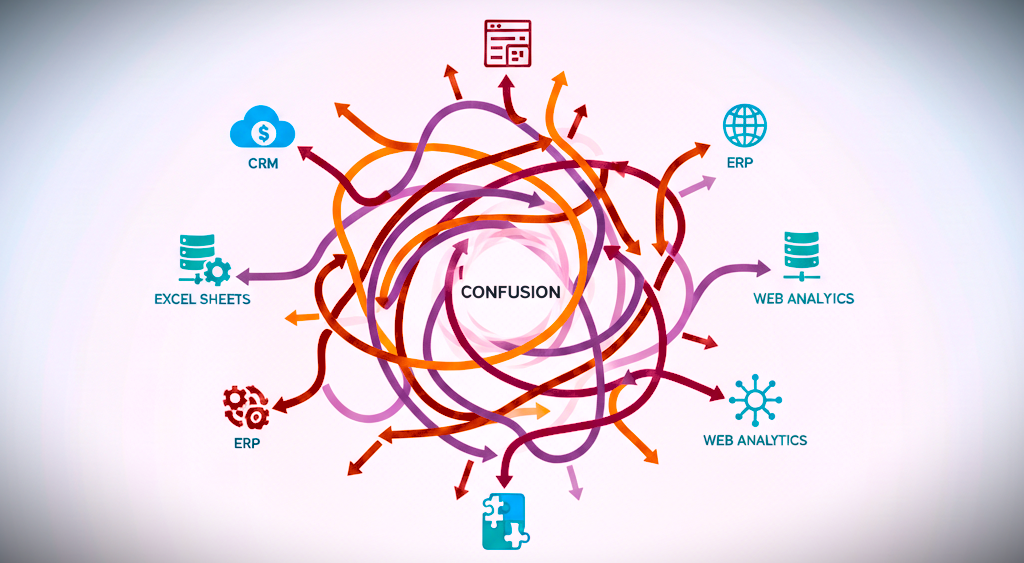
Six stakeholders, three opinions, one data source decision. How do you break the tie?
You've been in that meeting. You know the one.
Six people around the table — or six boxes on a video call — each representing a different part of the business (Commercial, IT, Marketing, Management, Business Intelligence and Logistics), different systems, a different versions of the truth. The question on the agenda sounds deceptively simple: Which data source do we use? Meaning which data is more trustful?
Forty-five minutes later, you're still there. circling the facts and reasons, and no decision made. Three follow-up meetings scheduled. And the data project? Still frozen.
Welcome to The Governance Deadlock — where authority is shared by everyone and owned by no one, and where the cost of endless debate quietly exceeds the cost of the problem you were trying to solve.
The Authority Vacuum: When Everyone and No One Owns the Decision
Here's the uncomfortable truth that most organizations refuse to name out loud: distributed responsibility without distributed authority is just organized chaos with better meeting notes.
When a data source decision needs to be made, the typical enterprise response is to involve everyone. Finance has a seat at the table. IT has a seat. Operations, Compliance, the Business Unit leads — all present, all vocal, all equally empowered to say yes, no, or the most dangerous word in data governance: "it depends."
The result? An authority vacuum.
Nobody is wrong, technically. Everyone has a valid perspective. But validity without accountability is just noise. When six stakeholders share equal weight in a decision, the effective decision-making power of each is diluted to near zero — and the organization pays the price in stalled timelines, duplicated efforts, and shadow data systems built by teams who simply gave up waiting for an answer.
An authority vacuum doesn't announce itself. It disguises itself as collaboration.
The symptoms are subtle at first — a decision deferred to "the next steering committee," a data standard that's been "under review" for three quarters, a governance policy that exists in a document nobody reads. But left unaddressed, the vacuum expands, and eventually it consumes entire data programs.
Analysis Paralysis: The Cost of Endless Debate
Let's talk about what the deadlock actually costs — because it's rarely measured, and almost never visible on a project dashboard.
Every week a data source decision remains unresolved, your organization is paying for:
- Duplicate data pipelines built by teams who couldn't wait for alignment
- Conflicting reports presented to leadership from different "authoritative" sources
- Engineering hours spent maintaining systems that shouldn't coexist
- Trust erosion — the slow, silent collapse of confidence in your data platform
Analysis paralysis in data governance is not a people problem. It is a structural problem. Teams are not indecisive because they lack intelligence or commitment. They are indecisive because the system gives them no clear mechanism to resolve conflict and move forward.
When every stakeholder has veto power and no stakeholder has final authority, the path of least resistance is more analysis. Another data quality report. Another comparison matrix. Another workshop. The data doesn't get better — the debate just gets more sophisticated.
Paralysis is not the absence of action. It is the presence of action without progress.
And here is what makes this particularly dangerous in data projects: unlike a delayed product launch or a missed marketing campaign, data debt compounds silently. By the time the organization feels the full weight of unresolved governance decisions, the cleanup cost is an order of magnitude higher than the original decision ever warranted.
The Practical Framework: Data Decision-Making Authority
Here is a simplified framework to break the tie when six stakeholders, three opinions, and one data source decision collide:
STEP 1 — CLASSIFY THE DECISION
      Is this operational, cross-domain, or strategic?
             ↓
STEP 2 — IDENTIFY THE AUTHORITY
      Who is the accountable owner at this tier?
             ↓
STEP 3 — CONSULT, DON'T CROWDSOURCE
      Gather input from relevant stakeholders — with a deadline.
             ↓
STEP 4 — DECIDE AND DOCUMENT
      The authority makes the call. Document the rationale.
             ↓
STEP 5 — COMMUNICATE AND ENFORCE
      Notify all parties. Enforce the decision in the data platform.
             ↓
STEP 6 — REVIEW AND EVOLVE
      Schedule a retrospective. Governance is not static.
This is not a perfect framework. No framework is. But a structured imperfect decision made today is worth more than a perfect decision made never.
The Path Forward: Establishing Clear Data Governance
Breaking the governance deadlock requires something most organizations are reluctant to do:
Make the implicit explicit.
This means moving from a world where authority is assumed, inherited, or contested, to a world where it is defined, documented, and enforced. Not as bureaucracy, but as infrastructure.
Effective data governance is not about creating more committees. It is about creating fewer, better-empowered decision points. Consider the following structural shifts:
Separate Consultation from Authority
Not every stakeholder needs decision-making power. Some need to be informed. Some need to be consulted. But only one — or one clearly defined group — needs to be accountable. The RACI model exists for a reason. Apply it to your data decisions with the same rigor you apply it to your engineering processes.
Define the Data Decision Taxonomy
Not all data decisions are equal. A decision about which CRM field maps to a master customer record is not the same as a decision about which system of record governs financial reporting. Build a tiered decision framework that matches the level of authority to the level of impact:
- Tier 1: Operational Decisions: Resolved at the domain level by Data Stewards
- Tier 2: Cross-Domain Decisions: Escalated to a Data Governance Council with defined voting rights
- Tier 3: Strategic Decisions: Owned by the Chief Data Officer or equivalent executive authority
Time-Box the Debate
Governance without deadlines is governance without outcomes. Every data decision should have a defined resolution window. If consensus cannot be reached within that window, the escalation path must be automatic and non-negotiable. The goal is not to rush good decisions, it is to prevent good decisions from dying in committee.
Make the Cost of Inaction Visible
Most organizations measure the cost of making a wrong decision. Few measure the cost of not making a decision at all. Build dashboards that surface governance debt, unresolved decisions, pending escalations, conflicting data sources in production. When inaction has a visible price tag, it becomes harder to justify.
Closing Thought
The battle for truth in your data ecosystem will not be won by better technology alone. It will not be won by more data sources, more pipelines, or more dashboards. It will be won or lost in the moments where your organization chooses to either define authority clearly or leave it dangerously ambiguous.
Six stakeholders. Three opinions. One decision.
The tie-breaker isn't a vote. It's a governance framework that was built before the meeting ever started.
Next week is our final "The Battle for Truth: Navigating Data's Critical Pain Points Across the Enterprise: The Bonus Part: The Way Forward.
Previously in this series: The Battle for Truth – Part 4 – The Implementation Gap: When Technical Complexity Meets Organizational Reality
#DataManagement #DataGovernance #DataIntegration #MasterData #DataStrategy #DigitalTransformation #DataQuality